

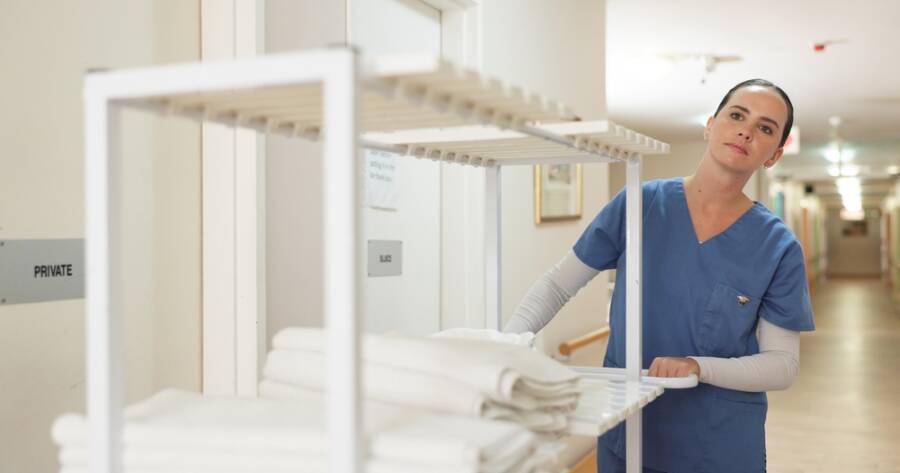
Hospital laundry operations are an essential part of maintaining safe, hygienic healthcare environments. Every day, hospitals collect, clean, and redistribute bedding, patient gowns, uniforms, and other reusable textiles. Shared materials may encounter blood, bodily fluids, and infectious microorganisms during use. Proper collection, washing, and storage procedures help protect patients and healthcare workers while ensuring that clean linens remain available for daily medical care.
The Scale and Importance of Hospital Laundry
Hospital laundry services handle enormous quantities of reusable textiles. Longstanding federal infection-control guidance estimates that healthcare facilities in the United States process approximately 5 billion pounds of laundry annually, although this figure comes from older research rather than a recent industry survey (source). These operations may take place within hospitals or at commercial facilities specializing in healthcare textiles.
Used hospital textiles can contain microorganisms from bodily fluids, skin, and other sources. However, the presence of contamination does not automatically mean that infection will occur. Proper handling and laundering substantially reduce potential exposure, allowing reusable fabrics to return to patient care without creating unnecessary health risks.
Collecting and Transporting Contaminated Laundry
Safe laundry operations begin before textiles reach the washing machines. Healthcare workers must collect used bedding and clothing carefully, avoiding unnecessary shaking or handling that could release contaminated particles into the surrounding environment.
Federal workplace safety regulations require contaminated laundry to be contained where it was used rather than separated or rinsed in patient-care areas. Appropriate bags or containers must prevent the escape of contaminated materials, with leak-resistant containment necessary when fluids could pass through ordinary laundry bags. Employees handling these items must also receive suitable protective equipment (source).
After collection, laundry travels to designated processing areas or off-site commercial facilities. Secure transportation and appropriate identification procedures help workers recognize potentially hazardous loads and prevent unnecessary exposure.
Separating Clean and Contaminated Work Areas
The physical layout of a hospital laundry facility plays an important role in preventing contamination. Processing operations generally maintain separate zones for incoming soiled textiles and materials that have completed washing.
In appropriately designed facilities, ventilation can help maintain airflow away from clean processing spaces and toward areas receiving contaminated materials. Workers also need accessible handwashing facilities and protective equipment suited to their responsibilities (source).
Clear separation continues throughout the operation. Laundry carts, sorting stations, and work surfaces must be managed so that cleaned fabrics do not come into contact with contaminated items. Equipment maintenance and consistent cleaning routines further support safe processing.
How Hospital Laundry Is Washed and Sanitized
Hospital washing procedures combine several cleaning mechanisms. Water and mechanical movement loosen debris, detergents help remove soil, and appropriately selected chemical additives or temperatures reduce microorganisms. The exact process depends on textile materials, equipment, and applicable requirements.
For hot-water laundering, established infection-control guidance commonly recommends maintaining at least 160°F (71°C) for 25 minutes (source). Lower-temperature washing can also reduce microbial contamination when wash cycles, detergents, and chemical additives are carefully controlled. Facilities must follow relevant regulations and fabric-care instructions when selecting a method.
The goal is to produce hygienically clean textiles, not necessarily sterile ones. Ordinary patient bedding generally does not require sterilization after appropriate laundering, while certain surgical textiles may need additional processing before clinical use.
Drying, Folding, and Protecting Clean Linens
Proper washing is only part of hospital laundry sanitation. Once cleaning is complete, textiles must be thoroughly dried and prepared for redistribution. Drying also contributes to microbial reduction, although suitable temperatures and cycle lengths depend on the fabric.
Clean linens are then folded, packaged, or placed in protected carts to prevent exposure to dust, moisture, and contaminated surfaces. When hospitals use external laundry providers, transportation arrangements must preserve separation between clean deliveries and used textiles.
Storage areas should keep processed fabrics dry and protected until needed. These precautions are essential because even successfully laundered materials can become contaminated again through improper handling.
Quality Control and Staff Safety
Reliable hospital laundry operations depend on trained employees and consistent procedures. Workers must understand how to identify contaminated materials, select protective equipment, operate machinery, and recognize circumstances requiring additional precautions.
Quality control also includes checking laundry equipment, reviewing cleaning procedures, and ensuring that textiles are processed according to their intended use. Hospitals and commercial laundry providers must account for different fabric types, including items that require specialized washing methods.
Although routine microbiological testing of every cleaned textile is not generally recommended, targeted testing may be appropriate when an investigation suggests that laundry contributed to an infection outbreak (source).
Alternative Laundry Methods in Resource-Limited Settings
Some healthcare facilities operate without reliable commercial laundry equipment or consistent hot-water supplies. In these environments, carefully managed manual processing may be necessary.
Guidance for resource-limited healthcare settings describes cleaning textiles with detergent and mechanical washing, followed by appropriate disinfection and thorough drying (source). These procedures require careful attention to worker protection and processing conditions.
Manual methods should not be considered automatically equivalent to properly controlled commercial laundering. Their effectiveness depends on the procedures, materials, and resources available.
Why Hospital Laundry Sanitation Matters
Hospital laundry services support patient safety through a coordinated process involving collection, transportation, washing, drying, and protected storage. Each stage helps reduce contamination risks and preserve the cleanliness of reusable healthcare textiles.
Effective sanitation requires more than powerful washing machines. Thoughtful facility design, appropriate protective equipment, trained workers, and consistent operating procedures are equally important. By maintaining these safeguards, healthcare facilities can provide dependable supplies of clean textiles while supporting broader infection-prevention efforts.