

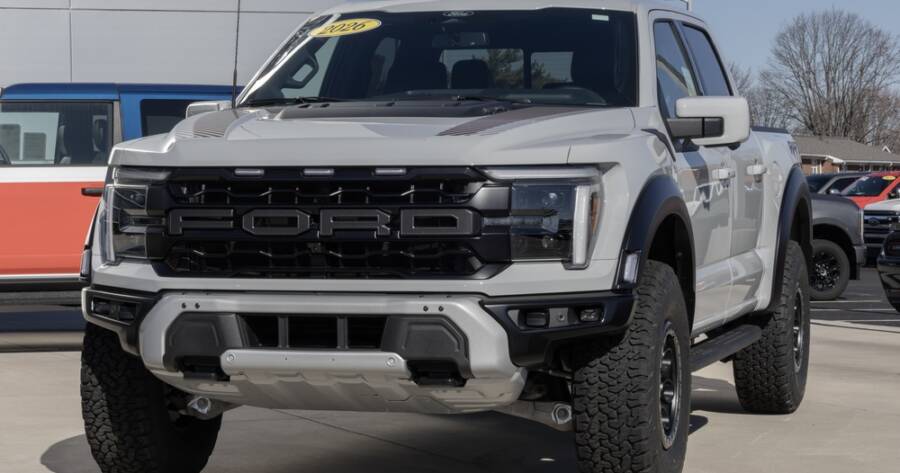
Two of America’s most popular full-size pickups — the Ford F-150 and the Ram 1500 — offer compelling but distinct takes on what a modern truck should be. Understanding their differences in performance, comfort, and value helps buyers make a more confident decision.
Powertrain Options and What They Deliver
Both the F-150 and Ram 1500 offer a range of engine configurations designed to suit different driving priorities. The Ram 1500 comes equipped with either a 3.6-liter V-6 producing 305 horsepower or a 5.7-liter V-8 rated at 395 horsepower, with both engines paired to a smooth eight-speed automatic transmission (source). A 48-volt hybrid assist system works alongside both powerplants to improve efficiency and responsiveness (source).
The F-150, meanwhile, takes a more aggressive approach with its available PowerBoost hybrid powertrain, combining a twin-turbocharged 3.5-liter V-6 with an electric motor to generate 430 horsepower and a substantial 570 pound-feet of torque (source). Ram counters with a Hurricane twin-turbocharged 3.0-liter inline-six engine that delivers 420 horsepower and 469 pound-feet of torque in its own high-output configuration (source). When measured against one another, the F-150’s PowerBoost hybrid holds an edge in both peak output and torque delivery.
Towing, Payload, and Real-World Capability
For truck buyers who prioritize work-site capability, both models bring serious hauling credentials. The Ram 1500 supports a maximum towing capacity of 12,750 pounds and can handle a payload of up to 2,320 pounds (source). Those are strong figures by any measure, though the F-150 edges ahead in maximum towing capacity, surpassing the 13,000-pound threshold (source).
The F-150’s advantage in towing aligns with its slightly lighter curb weight. At 5,631 pounds, it weighs less than the Ram 1500, which tips the scales at 5,765 pounds (source). That difference carries practical implications — the Ford’s stopping distance from 70 mph measured just 185 feet, compared to 196 feet for the Ram, a meaningful gap when heavy loads are involved (source).
Ride Quality, Suspension, and Daily Comfort
One area where the Ram 1500 has long stood out is ride comfort. Rather than relying on the conventional leaf-spring rear suspension used by most competitors, Ram engineers designed the 1500 with a coil-spring rear setup as standard equipment, with an available air-spring system that adds adjustable ride height (source). That architecture translates to a noticeably smoother, more composed feel over rough pavement — a trait that has made the Ram a favorite among buyers who spend as much time commuting as they do hauling.
The F-150, while not quite as plush, offers its own strengths in handling and responsiveness. In direct comparison testing, the Ford demonstrated better overall daily-driving dynamics, with sharper reactions and a more planted feel through corners (source). Fuel economy also favored the F-150 in real-world highway testing at 75 mph, where it returned 20 mpg against the Ram’s 18 mpg, though neither truck fully met its EPA-estimated figures (source).
Interior Features and Technology
Inside the cabin, the Ram 1500 cultivates a premium atmosphere that rivals some luxury SUVs. Buyers can select between an 8.4-inch touchscreen or opt for a larger 12.0-inch display, both of which support Apple CarPlay and Android Auto (source). The attention to material quality and interior refinement earned the Ram 1500 both a 10Best and Editors’ Choice distinction from Car and Driver for the 2024 model year (source).
The F-150 brings its own strong tech package, and in head-to-head testing, it delivered a compelling combination of modern features and practical ergonomics. Pricing for both trucks varies significantly based on trim and configuration. The tested Ford F-150 XLT with the PowerBoost hybrid had an as-tested price of $65,940, while the comparably positioned Ram 1500 Big Horn reached $68,320 (source). That made the Ford slightly less expensive in this specific test despite its hybrid powertrain and extensive options.
Awards, Recognition, and Overall Value
Awards and industry recognition offer another lens through which to evaluate these trucks. The Ram 1500 earned multiple accolades for its upscale interior and versatile capability, reflecting its strength as a premium daily driver (source). The F-150, in direct comparison, edged out the Ram by a single point in a rigorous evaluation that weighed performance, dynamics, and value together (source).
That razor-thin margin speaks to just how competitive this segment has become. Buyers who prioritize ride comfort and cabin refinement may find the Ram 1500 the more satisfying everyday companion. Those who emphasize outright performance, braking confidence, towing ceiling, and fuel savings on long highway runs may find the F-150 better suited to their needs. Neither truck represents a compromise — each reflects a different but equally thoughtful approach to the full-size pickup formula.
Learn More About F-150 vs. Ram Trucks
The Ford F-150 and Ram 1500 represent the pinnacle of American truck engineering, and the differences between them are more nuanced than a simple spec sheet can convey. The F-150 advantages in towing, braking, fuel economy, and hybrid performance contrast sharply with the Ram’s signature ride quality, award-winning interior, and broad powertrain lineup.
Whether a buyer is hauling heavy equipment, navigating a daily commute, or doing both, knowing exactly how these two trucks compare across real-world metrics is essential to making the right purchase. Both trucks carry strong reputations backed by decades of refinement, and understanding their individual strengths helps drivers invest wisely in a vehicle built to last.